
En el marco de 3POLE4FOOD, FutureWater contribuye a la evaluación de los efectos a largo plazo del cambio climático sobre la disponibilidad de agua y la producción agrícola en las principales cuencas fluviales asiáticas. El proyecto combina la modelización de la hidrología de montaña con la hidrología aguas abajo y la modelización de la producción agrícola para comprender mejor cómo los cambios en la nieve, el deshielo de los glaciares, las precipitaciones y la temperatura afectan al suministro de agua de riego y a la producción agrícola.

FutureWater lidera actividades técnicas clave relacionadas con los forzamientos climáticos, la corrección de sesgos en los conjuntos de datos meteorológicos y la generación de escenarios de cambio climático. Junto con Hydrominds y la Universidad de Wageningen, llevamos a cabo la modelización glaciohidrológica y el análisis de las interrelaciones hídricas entre las zonas aguas arriba y aguas abajo. Mediante el modelo SPHY, se simulan los caudales históricos y futuros de las cuencas de montaña, incluyendo las aportaciones de las precipitaciones, el deshielo de la nieve y el deshielo de los glaciares. Estos resultados se combinan con el modelo LPJmL para evaluar la disponibilidad de agua aguas abajo, la demanda de riego, el rendimiento de los cultivos y la productividad hídrica de los cultivos en futuros escenarios climáticos y socioeconómicos.

El proyecto proporciona una base científica para identificar las zonas en riesgo y comprender dónde los sistemas agrícolas pueden volverse más vulnerables a los cambios en el suministro de agua de las zonas montañosas. Al vincular el clima, la hidrología y la producción alimentaria, 3POLE4FOOD apoya una planificación basada en datos empíricos para lograr cuencas fluviales resilientes y sistemas alimentarios sostenibles en Asia.
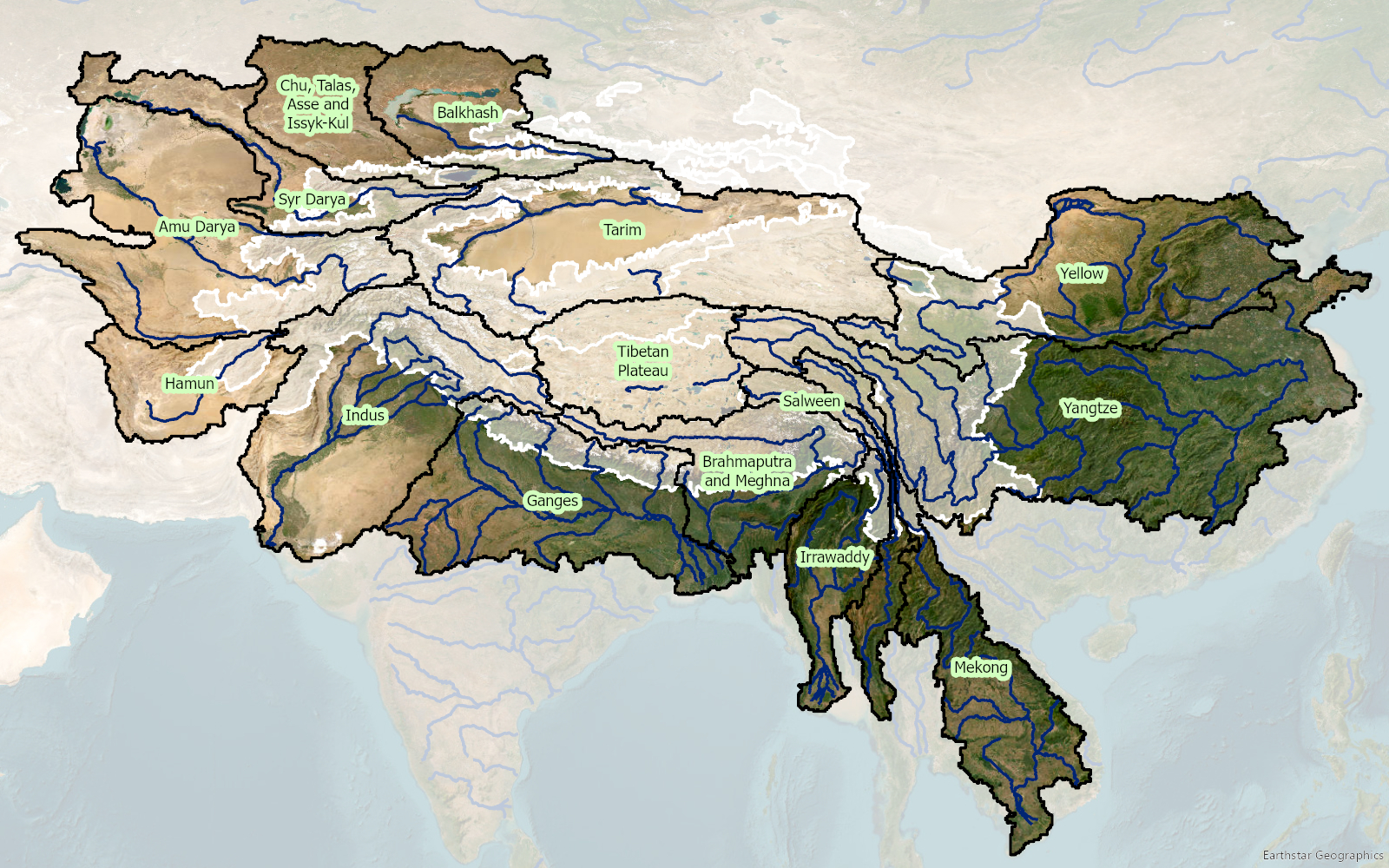

Cuencas fluviales con origen en las altas montañas de Asia incluidas en el proyecto 3POLE4FOOD. El polígono blanco indica las zonas de alta montaña.

Countries in Asia and the Pacific region are significantly exposed to disaster risks from various hazards and are on the frontline of a climate emergency. Studies suggest that 80% of the globally affected people belong to the Asia-Pacific region, thus emphasizing the critical need for an effective multi-hazard EWS.

EWS, a cost-effective tool for saving lives and reducing economic losses, is particularly crucial for frequent and hazardous weather, water, and climate events. However, despite advancements in the four EWS components, major gaps persist, with implementation lagging and limited coverage in frontline countries, including least developed countries (LDCs) and small island developing states (SIDS). As of 2021, only 50% of countries in Asia and the Pacific reported having multi-hazard early warning systems (MHEWS), emphasizing the need for support.

The culmination of these efforts will be encapsulated in a scoping report, documenting the results of the project, including consultations with key partners and stakeholders during the Regional Workshop on Increasing Investments in Early Warning Systems, to be held in February 2024 in Bangkok, Thailand. The study will offer a comprehensive summary of the EWS scoping, encompassing the policy and institutional landscape, status, initiatives, and investments, as well as residual gaps for regional and national EWS programming in selected DMCs. Additionally, this study will provide guidelines for the implementation and operationalization of the proposed EWS facility, along with initial investment concept notes based on EWS priorities at regional and/or national levels. This holistic approach aims to contribute substantively to the strengthening of EWS capacities, fostering resilience in the face of increasing disaster risks across the region.

Como uno de los países más vulnerables al cambio climático y con una gran dependencia del sistema fluvial del Indo para la agricultura, Pakistán se enfrenta a riesgos cada vez mayores derivados del aumento de las temperaturas, los cambios en las precipitaciones y la creciente variabilidad estacional en el deshielo de la nieve y los glaciares. La modelización de escenarios de cambio climático indica que, si se mantiene la situación actual, estas presiones supondrán graves amenazas para los medios de vida de los agricultores y para el sector agrícola en general. Es esencial disponer de información fiable, transparente y desglosada por sectores sobre el origen del agua, cómo se almacena y cómo se consume para orientar la cuenca hacia una gestión hídrica más resiliente y sostenible.

Con el apoyo de la FAO, el proyecto desarrollará un sistema de contabilidad hídrica que maximice el uso de la teledetección por satélite, complementado con datos in situ para la introducción de datos y la validación. El trabajo abarca cuatro resultados clave:

  1. Revisar críticamente los borradores de informes de contabilidad hídrica y los materiales de formación existentes elaborados por las partes interesadas, identificando las lagunas en la metodología y los conjuntos de datos
  2. Desarrollar una metodología holística de contabilidad hídrica que tenga en cuenta los recursos hídricos disponibles, los cambios en el almacenamiento, los caudales de salida, el uso del agua y la demanda en los sectores agrícola, industrial, doméstico y medioambiental
  3. Crear un sistema de contabilidad hídrica calibrado y validado, compuesto por modelos y códigos, basado en software libre y de código abierto, capaz de generar resultados de contabilidad hídrica para la cuenca del Indo y dos provincias
  4. Elaborar informes de contabilidad hídrica para la cuenca del Indo, el Punyab y Sindh, incluyendo las brechas históricas entre la oferta y la demanda, los balances hídricos y los mapas de distribución espacial.

Para garantizar que el sistema sea sostenible y de titularidad local, FutureWater impartirá una formación práctica y exhaustiva a los funcionarios del Gobierno, lo que les permitirá no solo ejecutar los modelos, sino también comprender la teoría subyacente y modificar el sistema en el futuro. Mediante la integración de modelos hidrológicos avanzados, la estimación de la evapotranspiración basada en la energía y la clasificación más reciente del uso del suelo, el sistema de contabilidad hídrica resultante proporcionará al Gobierno de Pakistán una herramienta potente y replicable para apoyar una agricultura y una gestión del agua resilientes al clima en toda la cuenca del Indo.

I-DIP se basa en InfoSequia, un avanzado conjunto de herramientas que integra datos de satélite, observaciones locales y aprendizaje automático para vigilar y pronosticar sequías. Se desarrollará un nuevo indicador de sequía repentina, adaptado al clima de Pakistán, que se integrará en el sistema existente del NDMC. El proyecto mejorará las capacidades de alerta temprana, salvaguardará la seguridad alimentaria e hídrica y contribuirá a los esfuerzos nacionales de adaptación al clima, allanando el camino para la ampliación del I-DIP a todo Pakistán.

Además de la vigilancia, el I-DIP conectará sus previsiones con las herramientas de toma de decisiones. La información sobre el impacto se difundirá a través de boletines informativos y de la aplicación inFarmer (desarrollada por WaterSprint), que ya se utiliza ampliamente entre las comunidades agrícolas. Los facilitadores de campo desplegados por la Iniciativa para un Mejor Algodón traducirán estos conocimientos en orientaciones prácticas para los agricultores, permitiéndoles adaptar las prácticas de riego, ajustar los calendarios de cultivo y mitigar las posibles pérdidas. Esta integración de la ciencia de vanguardia sobre la sequía con las redes de comunicación establecidas garantiza que las alertas tempranas se transformen en acciones prácticas sobre el terreno.

Al integrar el I-DIP en el sistema operativo del NDMC, el proyecto refuerza directamente la capacidad de alerta temprana de Pakistán en caso de sequía, se ajusta a las políticas climáticas nacionales y respalda los compromisos del país en el marco de los Objetivos de Desarrollo Sostenible. A largo plazo, se espera que el proyecto piloto catalice la ampliación del I-DIP a todo Pakistán, ofreciendo a las autoridades una herramienta de vanguardia para anticipar y gestionar estos fenómenos extremos.

With the highest rate of urbanization in South Asia and as one of the most vulnerable countries to climate change, Pakistan faces a range of complex challenges, including more frequent and intense flooding, declining economic productivity, and deteriorating public services. Growing dependence on groundwater, coupled with insufficient surface water recharge, is leading to severe localized groundwater depletion.

With support from the Asian Development Bank, the Government of Pakistan aims to upgrade and expand water and sanitation infrastructure in the cities of Sargodha and DG Khan, both of which face significant climate change-related challenges that impact combined drainage and sewer networks. The project has three major outputs:

  1. improving climate-resilient urban infrastructure and services,
  2. enhancing institutional capacity, operational efficiency, and gender inclusiveness of service providers, and
  3. creating greater economic empowerment opportunities for women in the WASH sector.

To assess the exposure and vulnerabilities of project components to potential climate risks, FutureWater will utilize advanced downscaled Coupled Model Intercomparison Project Phase 6 (CMIP6) ensembles, along with relevant hazard data and local information, to conduct a detailed Climate Risk Assessment (CRA). The insights gained will enable the Asian Development Bank (ADB) to implement effective adaptation measures and ensure climate-resilient development.

Currently, Pakistan’s energy mix consists of 58.8% thermal, 25.8% hydel, 8.6% nuclear, and 6.8% alternative sources, reflecting efforts to diversify from fossil fuels. Pakistan’s installed electricity generation capacity reached 41,557 MW by 2022, with significant growth in transmission line length over the past 5 years. However, the T&D system has not kept pace with the nearly 15,000 MW capacity added during 2017-2021 (ADB, 2024). Despite investments, transmission and distribution losses averaged about 18% over the last 5 years, exceeding the National Electric Power Regulatory Authority’s (NEPRA) 15.3% target. In 2020, 23.7% of generated energy was lost during transmission, distribution, and delivery (ADB, 2024). Notably, transmission and distribution losses exceed 25%, far higher than in comparable countries (GoP, 2017). Therefore, there is an urgent need to upgrade the existing distribution infrastructure to fulfill the energy demands and ensure steady socioeconomic development in the country. ADB will provide financing for four underperforming DISCOs, selected in consultation with the Ministry of Energy: Sukkur Electric Power Company (SEPCO), Hyderabad Electric Supply Company (HESCO), the Multan Electric Power Company (MEPCO), and the Lahore Electric Supply Company (LESCO) to:

  1. to upgrade the critical infrastructure of these DISCOs to reduce technical losses.
  2. to implement revenue protection measures to improve collections. Additionally, the project design includes embedded climate resilience and reform measures to enhance institutional capacity and financial sustainability.

These rehabilitation efforts will also take into account and address the growing impacts of climate change in four DISCOs. FutureWater will make use of state-of-the-art downscaled Coupled Model Intercomparison Project Phase 6 (CMIP6) ensembles, and other relevant hazards and local information to develop this CRA. Insights from the CRA will be used to devise adaptation strategies. Additionally, FutureWater will be reviewing the existing meteorological monitoring network and recommending additional potential monitoring sites for improved surveillance in the country. To further assist the Government of Pakistan, in actualizing its second Nationally Determined Contribution (NDC) agenda which seeks to reduce greenhouse gas (GHG) emissions per unit of GDP by 50% (compared to the level in 2016), by the year 2030, FutureWater will also develop a GHG account and prepare a Paris Agreement alignment assessment.

The project prepares robust climate mitigation and adaptation pipelines aligned with the Paris Agreement and responsive to DMCs climate change priorities. The TA will support interventions on departmental, sectoral and country levels with key activities including development of a regional strategy, upstream climate assessments, climate pipeline development, government dialogues and capacity building. As part of this project, FutureWater conducts a regional climate risk assessment for ten countries. This includes an assessment of baseline and future climate hazards, exposure and vulnerability and addressing sectoral impacts and adaptation options for a wide range of sectors. In addition country profiles summarizing climate risks for the ten countries are generated. The reginal climate risk assessment feeds into the climate strategy.

Pakistan is ranked as the 8th most climate vulnerable country in the world as per the Global Climate Risk Index (2019) and in recent years has been facing the worst brunt of climate change. Irregular and intense precipitation, heatwaves, droughts, and floods have severely impacted the agriculture and water sector. Approximately, 90% of the country’s freshwater resources are utilized by the agricultural sector. However, lack of information services makes it a challenge to implement a water accounting system for improved water resources management.

The GCF funded project titled “Transforming the Indus Basin with Climate Resilient Agriculture and Water Management” aims to shift agriculture and water management to a new paradigm in which processes are effectively adapting to climate change and are able to sustain livelihoods. FAO Pakistan, as per the request of the Ministry of Climate Change, has designed the project to develop the country’s capacity to enhance the resilience of the agricultural and water sector. There are three major components:

1. Enhancing information services for climate change adaptation in the water and agriculture sectors
2. Building on-farm resilience to climate change
3. Creating an enabling environment for continued transformation

FutureWater will be actively involved in Component 1 which focuses on facilitating the development of a water accounting system and improving the availability and use of information services. Given the limited data availability in the region, FutureWater will integrate the use of remote sensing technologies within the existing Water Accounting methodology to address this gap. A capacity and needs assessment will be conducted and a series of tailor-made trainings will be designed subsequently to enable key government stakeholders to use open-source geospatial analysis tools as well as models to estimate real water savings, particularly in the context of agriculture. The trainings will help build the country’s capacity to implement water accounting at different spatiotemporal scales and cope with the worsening impacts of climate change.

The SREB is part of the Belt and Road Initiative, being a development strategy that focuses on connectivity and cooperation between Eurasian countries. Essentially, the SREB includes countries situated on the original Silk Road through Central Asia, West Asia, the Middle East, and Europe. The initiative calls for the integration of the region into a cohesive economic area through building infrastructure, increasing cultural exchanges, and broadening trade. A major part of the SREB traverses Asia’s high-altitude areas, also referred to as the Third Pole or the Asian Water Tower. In the light of the planned development for the SREB traversing the Third Pole and its immediate surroundings, the “Pan-Third Pole Environment study for a Green Silk Road (Pan-TPE)” program will be implemented.

The project will assess the state and fate of water resources in the region under following research themes:

1. Observed and projected Pan-TPE climate change
2. Impacts on the present and future Water Tower of Asia
3. The Green Silk Road and changes in water demand
4. Adaptation for green development